RUBY FRANCIS INTERVIEW: 3 SONIC ARCHITECTURE SECRETS BEHIND MAKING MINIMAL, GRITTY YET SOFT BEATS
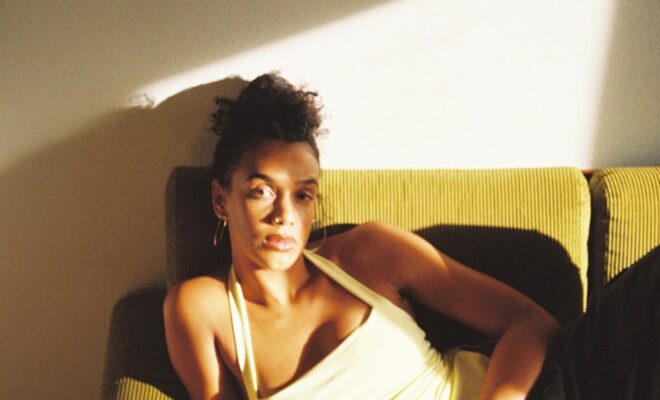
RUBY FRANCIS INTERVIEW: North London singer, producer and DJ Ruby Francis talks minimal, gritty yet soft beats, the lonely winter behind ‘Lanzarote’, and why more people making music can only be a good thing.
For Ruby Francis, a beat starts long before the laptop opens. Born, raised and still living in North London, she grew up with a bass-playing dad, a bedroom studio down the hall and a shared family record collection, then taught herself to turn all of it into a sound she calls minimal, gritty yet soft.
One year on from her self-produced album Pages of Philosophy, and with a remix EP handing its songs to MXXWLL, Geotheory, Fiji Mageba and more, Ruby sits down for our Sonic Architects series to talk about her most popular beats, writing through a tough time on a Canary Island, and the pros and cons of everyone having a DAW.
RUBY FRANCIS INTERVIEW: Firstly, briefly introduce yourself. What’s your name? Where are you from? How would you describe your production style?
Hello there! I’m Ruby Francis, born, raised and still living in North London. I’d describe my production style as minimal, gritty yet soft.
What would you say are the most popular beats you’ve created?
It’d have to be ‘Stuck Right Here’ from my debut album Archives, which I made in lockdown, or ‘Lanzarote’ from my latest album Pages of Philosophy.
What is your favourite song that you’ve worked on and why?
There’s many, but it’d have to be ‘Lanzarote’. The beat was made in January ’24, I was in a lonely and transitional place living in a new home in Stoke Newington. I found this kind of 80s indie drum loop and just went with it. I’d been listening to a lot of Men I Trust and World Brain, and feeling that 80s psychedelic, rocky vibe, and was inspired to make something like that but with my usual jazzy chords.
A few weeks after writing, I took the beat with me to write to on the beautiful Canary Island of Lanzarote, with a good friend of mine, Laura Roy. We were out there on a girls trip whilst emotionally going through a bit of a tough time, which I feel you can hear in the song. It’s a feel good, happy, danceable beat but with a melancholic vocal.
Do you think that production software becoming more accessible is a positive or negative thing for music? Why?
Good question. I can’t give a solid answer, I think there’s pros and cons. Yes, because it means many people of all abilities and backgrounds now have access to a new way of musical expression that may have previously not been affordable, been difficult to understand or learn to use, or they’ve been intimidated by the DAWs. For me, more people creating art always = a better world!
However, from an industry and business perspective, it has become very saturated and the knowledge of the original art form and history from analog to digital is starting to fade. There’ll be a wave of young producers and beat makers who may not understand that a synth plug-in used on a DAW is replicating a real life synth that existed many years before, which I feel should always be understood.
But in the end, more accessibility is not intrinsically wrong. I think the struggle more so comes after the creation, when you want to make yourself visible and sell your music. This is where I feel there may be an over saturation; to try and be heard, seen and make a solid living out of your work. But what I do know is working smart and consistency always works!
PHOTOGRAPHER: KJARTAN TRAUNER
JOIN THE INNER CIRCLE
This interview is part of our long-form content series, now hosted exclusively on our Substack. To read the full conversation with Ruby Francis and gain access to our archive of deep-dives into the architects of Hip Hop and global culture, head over to the Viper Substack.
[READ THE FULL INTERVIEW HERE]