DARAMA INTERVIEW: THE SONIC ARCHITECT REDEFINING THE UK UNDERGROUND AT 110 BPM [VP 2026 / VOL. 01]
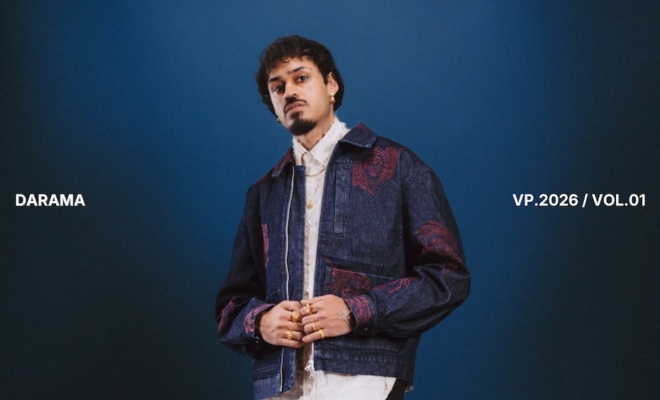
Darama on Refractions, 110 BPM Beats & DAYTIMERS | The Sonic Architects
From Lockdown Experiments to Culturally Charged Club Anthems: Darama Discusses the Power of Community, Breaking Temporal Boundaries, and the Evolution of His New Refractions Trilogy. In a landscape where club music often races toward ever-higher tempos, London-based producer and DJ Darama is finding liberation by slowing things down. Carving out a distinct niche at the rarely charted territory of 110 BPM, the DAYTIMERS mainstay and Bubblin co-founder is constructing a sound that is entirely his own—capturing a vibe he aptly describes as “euphoric but underground.”
Deeply rooted in the UK underground scene, Darama seamlessly fuses the heavy syncopation of Grime and UK Bass with the smooth sensibilities of R&B and Hip Hop. What truly sets his production apart, however, is the intentional integration of his Punjabi heritage. By weaving rich South Asian instrumentation and vintage vocal samples into driving, contemporary UK garage grooves, he creates forward-thinking club music that honours tradition whilst firmly rejecting nostalgia.
With his brilliant new self-released EP, Refractions 01, out in the world as the first instalment of an ambitious trilogy, we sat down with Darama for The Sonic Architects series to unpack his creative philosophy, the power of accessible software, and the art of re-contextualising classic sounds for modern dancefloors.
Briefly introduce yourself: What’s your name? Where are you from? How would you describe your production style?
I’m Darama, a DJ and producer based in London. British Asian, Punjabi heritage; I’ve been embedded in the UK underground for a few years now. My sound has drifted deliberately towards 110 BPM, a tempo that doesn’t get a lot of love in club music but I’ve found so inspiring recently. It’s allowed me to combine elements of R&B, Hip Hop with the more traditional UK Dance influences of Grime and UK Bass, all still being underpinned by South Asian texture, it feels like an exciting space to be in. Euphoric but underground. The goal is always forward motion, I’m not as interested in recreating something that already exists.
What would you say are the most popular beats you’ve created?
There’s a track called Sarangi that got a lot of traction — Nicole Blakk jumped on it and delivered some classic Punjabi bars for a Red Bull Mic Flex. It’s been getting played in the UK and India which has felt surreal. Blue Frog from Chaal on More Time Records had a moment too, I still get tagged in people playing and it was released 4 years ago now! Those were from an earlier era though — faster, more global club oriented stuff. The work I’m most focused on now is the new ‘Refractions’ series.
What is your favourite song that you’ve worked on and why?
I always feel like I’m creating my new favourite track which is a nice feeling as a producer! Out of the new material that I can talk about I’d say ‘ASHES’, the opening track on ‘Refractions 01’. It’s built around a vocal fragment from an Asha Bhosle recording from 1966 — a Bengali film song — and the way that sits against a driving UKG-influenced drum groove and this euphoric horn line, it felt genuinely fresh and that’s a feeling I’m always chasing. I think from previous releases, I’d say ‘Vera’ because I made it during lockdown when I was doing a virtual quiz with some friends. It felt like I had people in the room chatting to me which was a feeling I was craving during that time
Do you think that production software becoming more accessible is a positive or negative thing for music? Why?
Mostly positive. The gatekeeping was never the interesting part of music — the ideas were. When barriers drop, more people get to contribute and you end up with sounds that wouldn’t have existed otherwise. The flip side is there’s a lot of noise to cut through, and I think it creates pressure to follow trends because the tools make it easy to chase whatever’s working. I think that’s the trap that producers should avoid in the current landscape. Accessibility is a gift, the discipline is still knowing what you’re actually trying to say with it.
JOIN THE INNER CIRCLE
This interview is part of our long-form content series, now hosted exclusively on our Substack. To read the full conversation with Darama and gain access to our archive of deep-dives into the architects of Hip Hop and global culture, head over to the Viper Substack.
[READ THE FULL INTERVIEW HERE]