DOPESMOKE INTERVIEW: 67’S LEGACY, ‘FACE OF THE VI’ AND WHY UK DRILL ISN’T DEAD [2026 FEATURE]
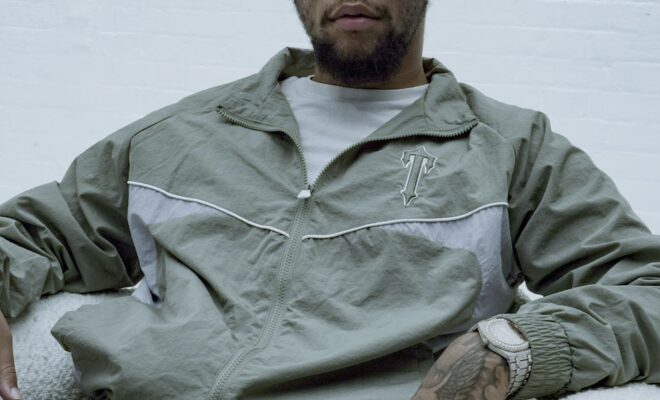
DOPESMOKE INTERVIEW – The South London rapper and 67 member on his solo tape, carrying a legacy, and staying loyal to drill.
In a candid conversation, Dopesmoke discusses his new tape Face Of The VI, what representing 67 means day to day, and why he refuses to let go of the original drill sound.
Dopesmoke has spent years flying the flag for 67, one of the most important names in UK drill. With Face Of The VI, he steps forward on his own. The tape is a solo statement that keeps his roots in plain view, built on the purist sound he came up on while leaving room for other styles.
Features come from K-Trap, Kairo Keyz, LD, SJ, Youngs Teflon, Tiny Boost and Silence, and the writing moves between road life and the blurred lines of relationships. In this interview, he talks South London, the pressure that comes with the 67 name, the door his Plugged In with Fumez opened, and where he wants the next year to take him.
DOPESMOKE INTERVIEW: Take us back to the start. How did growing up in South London shape you as a person and as a rapper?
Growing up in South London definitely played a big part in shaping who I am. It’s where I’m from, and a lot of my experiences growing up have influenced the way I think, the way I move and the music I make. Being around different people and different situations gives you a certain outlook on life. I feel like if I didn’t come from the South, I wouldn’t be the person I am today. Even the mistakes I’ve made along the way have helped shape me because without those experiences, I wouldn’t be who I am now. I think that comes through in my music because I like to keep it real and speak from my own experiences. South London will always be a big part of my identity, and it’s something I’ll always represent.
The tape is called Face Of The VI. What does that title mean to you, and why was now the moment to claim it?
For me, ‘Face Of The VI’ is personal because it’s about where I come from and everything that has shaped me. I’ve grown up representing this area, and 67 is a big part of my identity, so the title means a lot to me. I feel like it’s my time to step forward, carry that legacy in my own way and show people who I am as an individual artist. I didn’t want to just be known for being part of a group; I wanted to show what I’m capable of on my own while still staying true to my roots. It felt like the right time in my journey to make that statement.
You’re flying the flag for 67, one of the most important names in UK drill. What does carrying that legacy mean day to day, and does it ever feel like pressure?
I wouldn’t say there’s pressure in a negative way. I see it as something positive because carrying the 67 name is something I’m proud of. But without pressure, there are no diamonds, so of course there can be a little pressure at times. I think that can be a good thing because it keeps you motivated, pushes you to work harder and reminds you of the responsibility that comes with representing something bigger than yourself.
A lot of artists have moved away from the original drill sound, but you’re doubling down on it. What is it about the purist sound that you refuse to let go of?
I’m just making music that feels natural to me. Drill is a sound I come from, and it’s what a lot of my fans appreciate me for, so I don’t see a reason to turn my back on it. Drill has also given some of the UK’s biggest artists a platform and opportunities to reach where they are today. At the same time, I’m not limiting myself to one sound. I’m open to exploring different styles, and you can hear that across ‘Face Of The VI’. I want to stay true to my roots while showing people that I can do more than just drill.
People love to say UK drill is dead. What do you say to that, and what does this tape prove?
I don’t think UK drill is dead at all. I think people sometimes forget how much the genre has done for UK music and how many artists it has created opportunities for. Music is always evolving, but that doesn’t mean the original sound has to disappear. With ‘Face Of The VI’, I wanted to show that there’s still life in drill, there’s still creativity and there’s still a lot more we can bring to it. For me, it’s about staying true to the sound I came from and continuing to give people music that represents me.
The project goes deep into road life but also the blurred lines of relationships. Was it harder to open up about one than the other?
Not really, because I don’t think I’ve fully opened up about the other side of my life in my music yet. I know I can do it, but it’s something I haven’t really explored before. There’s always two sides to every story, and I feel like I’m now at a point in my career where I’m ready to explore different sides of music and express more of myself as an artist. I don’t want people to only hear one side of my story.
You’ve got K-Trap, Kairo Keyz, LD, SJ, Youngs Teflon, Tiny Boost and Silence on the tape. How did you decide who belonged on it, and which feature surprised you most in the studio?
I didn’t want to force anything when it came to the features. I wanted artists who I had a genuine connection with, whose music I respect and who I knew would bring something different to the project. Everyone on the tape has their own style, so it was about bringing those different energies together and making sure each collaboration felt natural. I wouldn’t necessarily say one feature surprised me more than the others because I rate everyone involved, but seeing how all the different sounds came together on one project was a good experience. Everyone brought something to the tape.
If someone only had time for one track from the tape, which would you play them and what’s the story behind it?
I’d tell them to listen to ‘Lonely at the Top’ because it shows another side of me. It touches on the grittier side of my life, as well as some of the pain and experiences I’ve been through. I feel like it’s a very honest record, and it also gives people a chance to hear my versatility as an artist. It shows that there’s more to me than just one sound or one side of my story.
Your Plugged In with Fumez is close to three million views. Looking back, what did that moment change for you, and how have you grown as an artist since?
I feel like the Plugged In opened a couple of doors for me, especially when it came to getting more exposure and opportunities to work with other artists through features. It helped take me to the next level within drill and introduced my music to a wider audience. Looking back, it was an important moment in my journey, but I’ve continued to develop since then. I’ve gained more experience, grown in confidence and become more aware of the direction I want to take as an artist.
This feels like a solo mission. Where do you want Face Of The VI to take you, and what does the next year look like?
I wanted ‘Face Of The VI’ to open the door for me as a solo artist and give people a better understanding of what I can do outside of the group. Over the next year, I want to keep building on that, grow my solo career and reach a wider audience. But that doesn’t mean moving away from the group. I’ll always be part of 67, and I still want to make music and do collaborations with the guys. It’s about building my own journey while continuing to represent where I come from.
This interview is part of our long-form content series, now hosted on our Substack. To gain access to our archive of deep-dives into the architects of Hip Hop and global culture, head over to the Viper Substack.