ERICK THE ARCHITECT INTERVIEW: PROPULSION, PREDICTABILITY, LONGEVITY AND OWNERSHIP [2026 FEATURE]
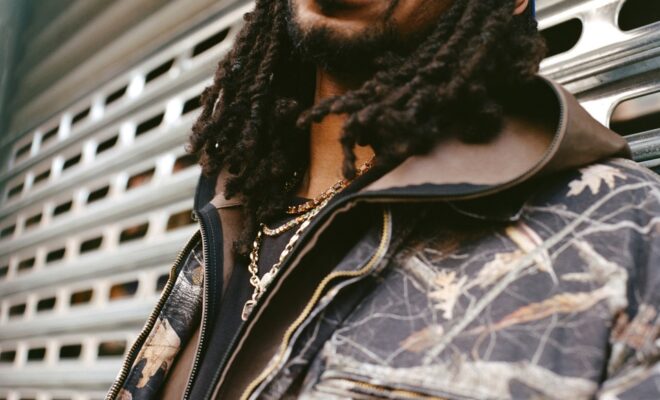
ERICK THE ARCHITECT INTERVIEW – The New York producer and 1/3 of Flatbush ZOMBiES on his upcoming album, London ties, and defying expectations.
In a candid conversation, the Flatbush Zombies founder discusses his upcoming album AFTERBURNER, defying feature expectations with Harlem and Staten Island royalty, and building bridges between New York and London.
Erick the Architect has never been one to stay stationary. As a founding member and primary producer of Flatbush Zombies, his sonic signature helped define an era of modern East Coast music. Now, leaning into a solo trajectory defined by forward momentum, the Brooklyn-born artist is preparing to release his latest project, AFTERBURNER.
From crafting custom music for Apple’s WWDC26 keynote to navigating high-profile writing camps with legends like Busta Rhymes and James Blake, Erick’s approach remains rooted in artistic integrity and relentless curiosity. In this interview, he breaks down the origins of his explosive single “YERR”, the distinct cultural parallels between New York and London, and why true success means never having to compromise who you are.
ERICK THE ARCHITECT INTERVIEW: Your latest single ‘YERR’ is a wicked listen. The record opens with you checking in on a loop, “Yerr, what’s up? We good? OK”. Where does that greeting come from, and why did it feel like the right way to open a New York record?
I’m not sure, the first time I heard someone say yerr… it’s one of those things you just pick up because you hear it all the time. To me, nothing is more New York than to greet someone by saying yerr, followed up by asking if they are good or not. New York is such a fast paced city, sometimes we feel like that’s all we need to know about someone in the moment. You good?
The beat snaps and swerves partway through, from a woozy club sound into a more slowed, nostalgic East Coast beat. Was that switch planned from the start or did it come when you knew who’d be featuring on the second half?
The beat switch came before there were any features at all. I didn’t imagine the beat switch actually, it was something we (the producers) tried as an idea and it just kind of made sense. I think once we had the beat switch it was easy to imagine features on the song. There’s two separate attitudes… who would be best to tell the story for their part of the track?
You brought Fergie Baby from Harlem and Ghostface Killah from Staten Island onto the same record. What made you think these two belonged on a track together and was there anything that surprised you from the experience?
I know what both of these MC’s are capable of… and I always think from the mindset of a listener. What would I be most excited about? I think a lot of todays Hip Hop is full of predictability and I wanted someone to say that this song didn’t make sense because of their expectation. I think that’s reason enough to give something a play in a time where I feel like a lot of the features are so predictable, “Of course they’d get ___ and ___ on a song!”
“YERR” is the next single to be taken from your upcoming album AFTERBURNER. Can you tell us more about the album name and what we can expect?
‘AFTERBURNER’ became the title shortly after recording the first few records for this album. I feel like the name is significantly different from my previous projects, and so is the music. I feel like a lot of my music was best heard in headphones, and I wanted to make something I intended to be listened to on the move. Much of what has moved me emotionally in the last year or so musically are things that give me nostalgia and movement. The ‘AFTERBURNER’ isn’t dwelling on the first step or first day, it’s propulsion. Continuing to keep something going even when it’s the hardest to put one foot in front of the other. Expect a project that delivers on this feeling, for sure.
Your work continuously blends a range of genres including soul, dub, psych, and electronic elements. Are there any new genres or production techniques you pushed yourself to experiment with on this rollout?
I’m a fan of all genres. This album is a glimpse at a few of them, done in a way only I can.
Can you talk through creating ‘Appreciation’ for Apple’s WWDC26 keynote in Cupertino. How was the experience and how do you approach crafting music for a global tech platform?
I honestly approached this particular project the same as any other project I’ve worked on. Once I understand my goal and my audience, I get to work. The hardest thing about working with a big company is holding onto your integrity while also keeping the people you are collaborating with happy. I’ve been using Apple projects to produce and listen to music pretty much my entire life, it’s still pretty surreal to have a song that will forever be associated with such a landmark company. In a song I recorded during the COVID lockdown, “Skinny Ramen”, I said “They don’t like my output or my Outlook, I’m an Apple guy anyway.” In 2026 I really showed people I’m from the Big Apple and I’m definitely good enough to be acknowledged by Apple as well!
From recent writing camp sessions with Busta Rhymes to working with key names such as James Blake and George Clinton, what do these collaborative environments bring out in your production style?
I think I have a production style that can assimilate to any artist I enjoy listening to. If I am familiar with your work, that’s one thing. If I’m a big fan, that’s another thing. I will say this: What I don’t want is to give an artist a record I feel like they could’ve made themselves. What’s the point of doing that? They don’t need me to make a song they’ve already made, they need me to bring light to something they’ve never done before.
Having recently worked with GRAMMY House NYC for the Black Music Collective, what are the most urgent conversations artists should be having right now around ownership and longevity?
This is such a difficult topic to dive into without expounding on it for paragraphs. Simply; ownership is power. Longevity is accomplished by making music that is true to you and not falling victim to fitting in with whatever else is out there. All of my idols practiced a healthy balance of both of these things in order to last the test of time.
Between supporting Jamiroquai, collaborating with Jungle on “Candle Flame,” and linking up with the likes of Col3trane and JGrrey, what draws you to working so closely with the UK scene?
London is one of my favourite cities in the world to visit and to perform in. I’ve been a fan of the UK music scene before I ever went there, so stepping foot there over 10 years ago for the first time was that much more validating once I got to experience what it’s like to actually be there. There are a lot of parallels between New York and London in terms of the energy and culture… it’s probably the most integrated city culturally besides New York! I feel like London and New York even have similar weather: all of my favourite artists make these songs while captive at home because of bad weather, waiting to go back outside when the weather is nice again. I don’t know if thats the exact premise, but I feel like all my UK friends can relate to something like that.
As the primary producer and founding member of Flatbush Zombies, how has your process for beat-making and arrangement shifted as you build solo projects in your studio?
I don’t think think there’s much of a difference. The music either flows or it doesn’t. My process has always been the same as I am a student of music, and everything I make is a process of expression and research. As Flatbush Zombies the lift as a producer required me to create a canvas for all of us to fit on, while a solo project is a bit more selfish in the process… that’s about the only difference. There’s no room for selfishness in a group.
With high-profile tech partnerships, major festival appearances and new material on the horizon, what does success look like for you at this point in your career?
I am grateful to be able to make an impact in the industry while still being myself in 2026 and so forth. I’ve never had to change myself to have to be accepted by anyone, and I don’t plan to. Success to me is continuing to tell this story and being able to look into the mirror and still see Erick Elliott.
This interview is part of our long-form content series, now hosted on our Substack. To gain access to our archive of deep-dives into the architects of Hip Hop and global culture, head over to the Viper Substack.